Agentic AI vs Generative AI: Key Differences for 2026

The AI landscape in 2026 is moving fast, and two terms keep coming up in every conversation: generative AI and agentic AI. If you have used ChatGPT to draft an email, create a blog post, or generate an image, you have already experienced generative AI in action. But a more powerful paradigm is now reshaping how businesses operate. Agentic AI goes beyond creating content. It takes action, makes decisions, and completes multi-step workflows with minimal human supervision.
Understanding the difference between these two types of AI is not just an academic exercise. It directly impacts how you invest in technology, automate your workflows, and serve your customers. With more than 90% of organizations planning to increase AI spending this year (Workday) and Gartner projecting that 40% of enterprise applications will include agentic AI by the end of 2026, knowing when to use which type of AI gives your business a real competitive edge.
This guide explains agentic AI vs generative AI in plain language, covers real-world use cases, and shows how modern platforms are combining both to deliver results that neither could achieve alone.
Key Takeaways
- Generative AI creates content (text, images, code) in response to prompts. Agentic AI pursues goals, makes decisions, and executes multi-step tasks autonomously.
- The simplest way to remember the difference: generative AI is reactive, agentic AI is proactive.
- Agentic AI builds on top of generative AI. Most agentic systems use large language models (LLMs) as their reasoning engine while adding planning, tool use, and execution capabilities.
- Over 80% of enterprise leaders report they are already expanding their use of AI agents (Workday).
- Businesses can start with generative AI for content creation and then layer agentic capabilities for workflow automation. Platforms like FwdSlash bridge both worlds by offering AI agents that generate responses and take action through lead capture, meeting scheduling, and CRM integrations.
- The small business AI agent advantages are especially significant as agentic AI becomes more accessible through no-code platforms.
What Is Generative AI?
Generative AI refers to artificial intelligence systems that create new content based on patterns learned from massive training datasets. When you ask ChatGPT to write a product description, ask Midjourney to generate an image, or use GitHub Copilot to write code, you are using generative AI.
The technology works through large language models (LLMs) and deep learning algorithms that predict the most likely next word, pixel, or code element in a sequence. The result is original content that did not previously exist, created in response to your prompt.
In 2026, generative AI has become remarkably capable. Models produce fewer hallucinations, run more efficiently, and support multi-modal inputs (text, images, audio, video). But at its core, generative AI still operates the same way: you provide a prompt, it generates an output. No prompt means no action. Each interaction typically stands alone.
Common generative AI use cases include drafting blog posts, emails, and marketing copy, generating images and design assets, writing and debugging code, summarizing documents and research, creating chatbot responses for customer support, and producing SEO-optimized content at scale.
Generative AI excels at creativity, pattern recognition, and content production. But it does not plan, it does not take autonomous action, and it does not pursue goals across multiple steps.
What Is Agentic AI?
Agentic AI represents the next evolution in artificial intelligence. These systems do not just create content. They independently pursue goals by planning steps, making decisions, using tools, executing actions, and adapting based on results.
The word "agency" here does not imply consciousness. It means the AI has the ability to act within defined boundaries to achieve a specific outcome. An agentic AI system typically includes a reasoning engine (usually a generative LLM), a planning module that breaks complex goals into sub-tasks, memory that retains context across interactions, tool access to interact with external systems (APIs, CRMs, email, calendars), and feedback loops that let the system learn from outcomes.
Here is a concrete example that illustrates the difference. If you ask generative AI to "write a follow-up email to a sales lead," it generates the email text. You then copy the text, paste it into your email client, add the recipient, and hit send. If you give the same task to an agentic AI system, it retrieves the lead's details from your CRM, checks their interaction history, generates a personalized email using generative AI, sends it at the optimal time, and updates the CRM record. The agentic system handles the entire workflow, not just the content creation step.
In 2026, agentic AI has moved from experimental pilots to operational reality. Enterprise-grade agent frameworks, improved multi-step reasoning, regulatory clarity, and mature orchestration tools have made autonomous AI agents viable at scale.
How Are Agentic AI and Generative AI Different?
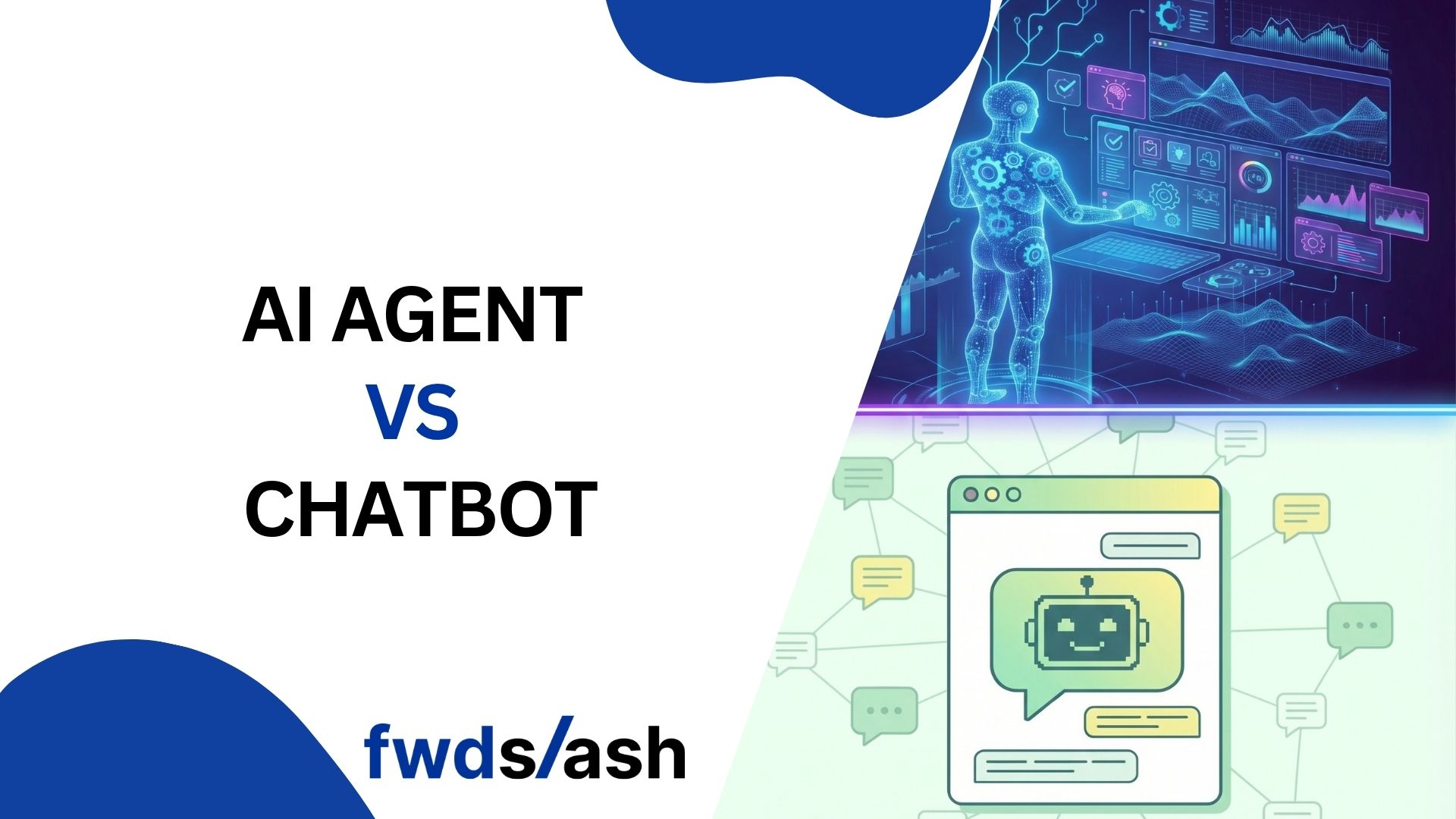
The fundamental difference is straightforward: generative AI creates, agentic AI acts. But the distinctions go deeper across several dimensions.
Reactive vs proactive. Generative AI waits for a prompt and responds. Agentic AI can initiate actions based on triggers, schedules, or changing conditions without waiting for human input. A generative chatbot answers when a visitor asks a question. An agentic chatbot proactively engages visitors based on their browsing behavior, qualifies them through conversation, captures their information, books a meeting, and updates the CRM.
Single-step vs multi-step. Generative AI typically completes one action per request. Agentic AI chains multiple steps together to accomplish a complex goal. It breaks down high-level objectives into sub-tasks and executes them in sequence, adjusting if something does not work as expected.
Content vs outcomes. Generative AI produces outputs like text, images, or code. Agentic AI produces business outcomes like qualified leads, resolved support tickets, completed transactions, or optimized processes. The distinction matters because businesses ultimately care about results, not just content.
Stateless vs persistent. Most generative AI interactions are stateless. Each prompt starts fresh. Agentic AI maintains persistent goals across multiple interactions and time periods, remembering context and building on previous actions.
Tool use. Generative AI generates text or media. Agentic AI can call external tools, APIs, databases, and services. It can check inventory, send emails, update records, schedule meetings, and interact with third-party software as part of its workflow.
How Do Agentic AI and Generative AI Work Together?
These two types of AI are not competitors. They are complementary. In fact, most agentic AI systems use generative AI as a core component. The generative model serves as the reasoning engine and content creator, while the agentic framework adds planning, tool access, and execution capabilities.
Think of it this way: generative AI is the brain that thinks and creates. Agentic AI is the employee that thinks, creates, and then takes action to get things done.
A practical example in customer support: an AI agent receives a customer complaint about a delayed shipment. The agentic system checks the tracking system to identify the issue, uses a generative AI model to draft a personalized, empathetic response, sends the email to the customer, creates a follow-up task for the logistics team, and closes the support ticket. The agent handled the entire workflow. The generative model handled the creative writing part.
This layered approach is exactly how modern AI platforms are being built. FwdSlash, for example, combines generative AI capabilities (answering questions using trained knowledge bases) with agentic features (lead capture, meeting scheduling, configurable fallback logic, and multi-platform deployment). When a visitor interacts with a FwdSlash AI agent on your website, the generative layer understands and responds to questions. The agentic layer qualifies the visitor, collects their information, and routes them to the right next step.
This is the direction the entire AI industry is heading. Pure generative AI will remain essential for content creation. But the real business value comes from wrapping those capabilities in agentic frameworks that produce outcomes, not just outputs.
What Are the Real-World Use Cases for Each?
Understanding where each type of AI excels helps you make smarter investment decisions.
Generative AI excels at: content creation (blogs, emails, ad copy, social media posts), code generation and debugging, document summarization and analysis, image and video creation, translation and localization, and creative brainstorming and ideation.
Agentic AI excels at: customer support workflows that resolve issues end-to-end, lead qualification and sales pipeline automation, appointment scheduling and calendar management, supply chain optimization and inventory management, financial reporting and compliance workflows, IT operations and incident response, and multi-step marketing campaigns that execute across channels.
Combined agentic + generative AI excels at: AI chatbots that both answer questions and capture leads (like FwdSlash agents), customer service agents that diagnose problems, generate personalized responses, and execute resolutions, sales development workflows that research prospects, draft outreach, and schedule meetings, and content production pipelines that research topics, create drafts, optimize for SEO, and publish to CMS platforms.
For small businesses, the combination is particularly powerful. Marketing AI agents for small businesses can handle tasks that would otherwise require hiring dedicated staff, from answering customer questions around the clock to qualifying leads and booking sales calls.
Why Does 2026 Matter for Agentic AI?
Agentic AI concepts have existed for years, but 2026 is the year the technology became operationally viable at scale. Several factors converged to make this happen.
Model capabilities improved dramatically. Modern LLMs demonstrate significantly better multi-step reasoning and long-horizon planning, reducing failure rates in complex task decomposition. Enterprise frameworks matured. Orchestration platforms now manage tool integration, memory, monitoring, and fallback mechanisms in production environments, not just experiments.
Regulatory clarity emerged. Governments and industry bodies began outlining compliance expectations for autonomous AI systems, giving businesses the confidence to deploy agents in regulated industries. The ecosystem standardized. APIs, monitoring tools, security frameworks, and protocols like the Model Context Protocol (MCP) made integrating AI agents with existing business systems more predictable and reliable.
The result is that businesses can now deploy AI agents that reliably execute multi-step workflows in customer service, sales, operations, and internal processes. The technology is no longer experimental. It is production-ready.
How Can Your Business Start Using AI Agents Today?
You do not need to build a custom agentic AI system from scratch to benefit from this technology. Modern no-code platforms have made AI agents accessible to non-technical teams.
The most practical entry point is deploying an AI agent on your website. Platforms like FwdSlash let you create an agent that combines generative AI (answering questions from your knowledge base) with agentic capabilities (capturing leads, scheduling meetings, routing conversations). You can train your AI chatbot on your own content in minutes and deploy it on any website, including WordPress, Shopify, Wix, Webflow, and HubSpot.
FwdSlash supports multi-model AI (GPT-4, Claude, Gemini, Deepseek), so you can choose the model that works best for your use case. The agent integrates with tools your team already uses, including Slack, Gmail, Notion, WhatsApp, and Zapier. This is agentic AI in action: an AI system that does not just answer questions but pursues the goal of converting website visitors into qualified leads.
Start with generative AI for quick content wins, then gradually layer agentic capabilities for workflow automation. The businesses gaining the most competitive advantage in 2026 are those that use both together intelligently.
Conclusion
The agentic AI vs generative AI distinction is not about choosing one over the other. It is about understanding what each does best and combining them strategically.
Generative AI creates content. It is your creative assistant for drafting, designing, coding, and brainstorming. It is reactive, prompt-driven, and excels at single-step tasks.
Agentic AI creates outcomes. It is your autonomous worker that plans, decides, acts, and adapts. It is proactive, goal-driven, and designed for multi-step workflows that produce measurable business results.
The most powerful approach is using both together. Deploy generative AI for content creation and analysis. Layer agentic frameworks on top for execution and automation. Platforms like FwdSlash already embody this combination, offering AI agents that generate intelligent responses from your knowledge base while autonomously capturing leads, scheduling meetings, and integrating with your existing tools.
The competitive advantage in 2026 belongs to businesses that move beyond asking AI to create things and start deploying AI that gets things done.
Frequently Asked Questions
What is the main difference between agentic AI and generative AI?
Generative AI creates new content (text, images, code) in response to prompts. Agentic AI autonomously pursues goals by planning steps, making decisions, using tools, and executing multi-step tasks. The simplest summary: generative AI is reactive, agentic AI is proactive.
Is ChatGPT generative AI or agentic AI?
ChatGPT is primarily generative AI at its core. It generates text responses based on prompts. However, newer versions have added tool use and agent-like features (web browsing, code execution, API calls), making it a hybrid. The foundation is generative, with agentic capabilities layered on top.
Can small businesses use agentic AI?
Yes. No-code platforms like FwdSlash make agentic AI accessible to non-technical teams. You can deploy an AI agent on your website that answers customer questions (generative), captures leads, and books meetings (agentic) in under 5 minutes. Exploring small business AI agent advantages is a good starting point.
Does agentic AI replace generative AI?
No. Agentic AI builds on top of generative AI. Most agentic systems use a generative model (like GPT-4 or Claude) as their reasoning engine while adding planning, memory, and tool access. They are complementary technologies, not competing ones.
How is agentic AI used in customer support and sales?
In customer support, agentic AI handles entire workflows: identifying problems, generating personalized responses, executing solutions, and updating records. In sales, AI agents qualify leads through conversation, capture contact information, schedule meetings, and sync data to CRMs. Platforms like FwdSlash combine both into a single AI agent that can be trained on your custom knowledge base and deployed across websites, Slack, WhatsApp, and more.


Lastest blog posts
Tool and strategies modern teams need to help their companies grow.