Chatbots for Employee Engagement: HR Use Cases for 2026
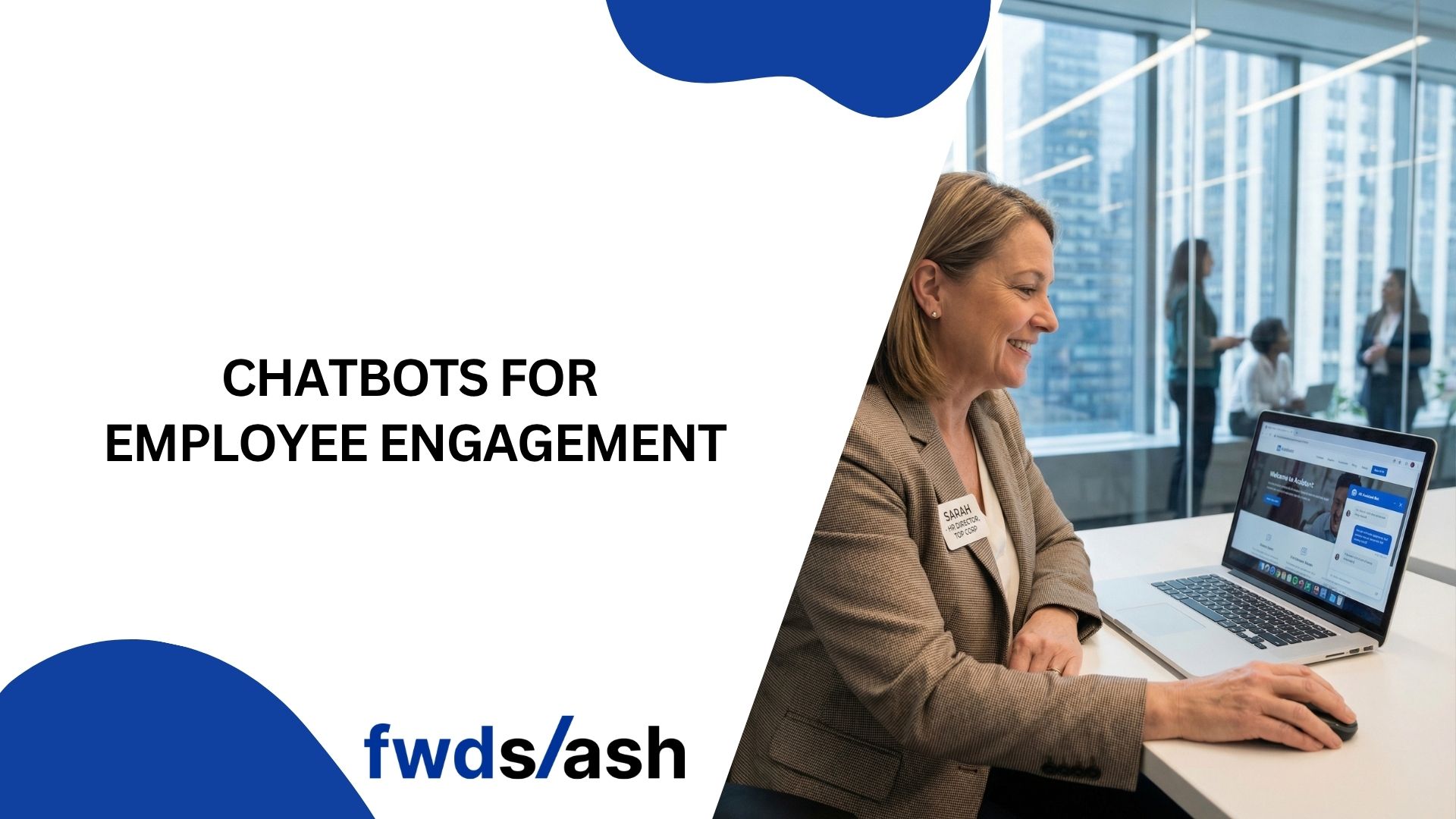
Employee disengagement is costing US businesses a staggering $1.9 trillion in lost productivity every year, according to Gallup's 2023 State of the Global Workplace report. HR teams are stretched thin, repetitive questions flood inboxes, and employees feel disconnected, especially in hybrid and remote-first environments. The solution an increasing number of companies are turning to? AI-powered chatbots built specifically for employee engagement.
In this article, you will find practical HR use cases, real statistics, and a breakdown of how conversational AI is transforming the employee experience, whether you run a 10-person startup or a 10,000-person enterprise.
Key Takeaways
- 68% of employees say they would prefer to interact with a chatbot for quick HR questions rather than wait for a human response (Salesforce, 2023)
- HR chatbots can handle up to 80% of routine employee queries automatically, freeing HR staff for strategic work
- Companies using AI in HR processes report up to 40% reduction in time-to-resolution for employee requests
- A chatbot for employee engagement works across onboarding, benefits, performance, and internal communications
- Platforms like FwdSlash let you deploy a fully customized AI agent for HR in under 4 minutes, no coding required
Chatbot for Employee Engagement: What It Really Means
A chatbot for employee engagement is not just a FAQ bot. It is a persistent, intelligent assistant that sits inside the tools your employees already use, such as Slack, your company intranet, or your HR portal, and helps them get answers, complete tasks, and feel supported without waiting in an email queue.
Modern employee engagement chatbots are powered by large language models (LLMs) like GPT-4 and can be trained on your company-specific knowledge base, including HR policies, benefits guides, onboarding documents, and org charts. They handle everything from "How many PTO days do I have left?" to "Walk me through the performance review process."
Unlike traditional HR software, these conversational AI tools create a two-way interaction that mimics talking to a knowledgeable colleague, available 24 hours a day, 7 days a week. For distributed teams across US time zones, that always-on availability alone drives a measurable lift in satisfaction scores.
What Are the Top HR Use Cases for Employee Engagement Chatbots?
1. Onboarding Automation
The first 90 days are make or break. Research from BambooHR found that employees who have a positive onboarding experience are 82% more likely to stay with a company long-term. Yet most onboarding processes are still manual, inconsistent, and overwhelmingly dependent on HR bandwidth.
An AI onboarding assistant can:
- Deliver personalized welcome messages and first-day checklists
- Answer policy questions about benefits enrollment, equipment requests, and payroll setup
- Guide new hires through compliance training modules
- Collect e-signatures and form completions through natural conversation
With FwdSlash, you can build a custom knowledge base chatbot trained on your exact onboarding documentation and deploy it directly into Slack within minutes, no developer required.
2. Benefits and Policy Q&A
HR teams report that benefits-related questions account for up to 30% of all inbound HR requests, with spikes during open enrollment. These are time-consuming for HR but low complexity, making them a perfect target for automation.
An employee engagement chatbot can instantly answer:
- Health insurance plan comparisons
- 401(k) contribution rules
- FMLA eligibility and leave policies
- Remote work stipend guidelines
By deploying a conversational AI assistant that is always current with your policy documents, you reduce the back-and-forth and give employees the self-service experience they expect in 2025.
3. Internal Help Desk and IT Support
The lines between HR and IT support often blur for employees. Questions like "How do I reset my SSO?" or "What equipment can I expense?" land in both inboxes. A unified AI help desk chatbot that covers both functions reduces ticket volume significantly.
According to IBM, organizations that deploy AI-powered service desks see a 30 to 40% reduction in IT and HR ticket volume. When integrated into tools like Slack or Notion, the chatbot surfaces answers directly in the workflow where the employee is already working.
4. Performance Management Support
Performance review cycles are notoriously stressful and confusing. An AI assistant can demystify the process by:
- Explaining rating scales and competency frameworks
- Reminding managers and employees of upcoming deadlines
- Answering questions about promotion criteria
- Providing feedback writing assistance based on company guidelines
43% of highly engaged employees receive feedback at least once a week (Gallup), but most managers lack the time or tools to maintain that cadence. Conversational AI bridges that gap by providing structured feedback prompts and check-in workflows automatically.
5. Employee Wellbeing and Mental Health Check-ins
Workforce mental health is now a boardroom-level priority in the US. The American Institute of Stress reports that 83% of US workers suffer from work-related stress, and the cost to employers exceeds $300 billion annually through absenteeism and turnover.
AI-powered pulse survey bots and wellbeing check-ins allow HR teams to:
- Run anonymous weekly mood surveys at scale
- Identify burnout signals and flag them to HR managers
- Direct employees to EAP (Employee Assistance Program) resources automatically
These bots are not replacing mental health professionals. They are reducing the friction between an employee who needs help and the resource that can provide it.
6. Learning and Development Recommendations
A LinkedIn Workplace Learning Report found that 94% of employees say they would stay at a company longer if it invested in their career development. AI chatbots can function as personalized L&D concierges, suggesting relevant training content, courses, and skills certifications based on an employee's role and career goals.
Integrated with your LMS or platforms like HubSpot or Notion, a smart learning assistant turns passive content libraries into active development conversations.
How Do AI Chatbots Actually Improve Employee Engagement Scores?
The mechanism is straightforward: employees who get fast, accurate answers to their questions feel more supported and valued. That perceived support directly correlates with engagement.
Research from MIT Sloan found that employees at companies with strong digital workplace tools are 23% more satisfied with their jobs than those working with outdated or slow internal systems. When HR technology feels like it was designed for the employee rather than for the company's administrative convenience, engagement follows.
There are three core engagement levers that chatbots activate:
Speed: No more waiting 2 business days for an HR email reply. Instant answers create a sense of responsiveness that builds trust.
Consistency: Every employee gets the same accurate answer regardless of which HR rep is on duty or what time zone they are in.
Autonomy: Employees who can self-serve HR needs feel more in control of their experience, which is a strong driver of intrinsic motivation.
Why Small Businesses Benefit Most from HR Chatbots
Enterprise companies have HR armies. Small businesses have one HR generalist trying to do the work of ten. This is where the small business AI agent advantages become most tangible.
A small business deploying an AI agent for HR can:
- Automate the routine so the team focuses on culture and hiring strategy
- Offer an employee experience that competes with Fortune 500 companies
- Scale HR support as the team grows without proportional headcount increases
The cost case is equally compelling. Traditional HRIS platforms with chatbot modules can cost thousands of dollars per month. FwdSlash offers a free tier and paid plans starting at just $20/month, giving small businesses enterprise-grade conversational AI at a fraction of the cost.
For companies exploring marketing AI agents for small businesses alongside internal HR tools, platforms like FwdSlash provide a unified AI infrastructure that serves both customer-facing and employee-facing functions from a single dashboard.
How Does FwdSlash Enable Employee Engagement Chatbots?
FwdSlash is an AI agent builder platform that lets any business deploy customized AI chatbots and agents in minutes, without writing a single line of code. For HR teams, this means:
- Upload your HR knowledge base (policy docs, employee handbook, benefits guides) and instantly create a chatbot that knows your organization inside out
- Deploy across multiple channels including your intranet, Slack, Gmail, and any website via embed
- Multi-model support including OpenAI, Claude, and Deepseek, so you can choose the best model for your sensitivity requirements
- Lead and data capture built in, which doubles as an employee data collection tool for surveys and feedback
You can also train your AI chatbot iteratively as your policies and programs evolve, keeping the employee experience accurate and current. FwdSlash integrates natively with tools like Gmail, WordPress, Webflow, and Wix, making it a flexible fit for whatever stack your HR team operates on.
For teams running on Shopify or BigCommerce with embedded employee portals, FwdSlash also supports Shopify and BigCommerce integrations out of the box.
What Should You Look for in an Employee Engagement Chatbot Platform?
Not all HR chatbot solutions are equal. When evaluating platforms, prioritize these capabilities:
- Custom knowledge base training so the bot reflects your actual policies, not generic HR templates
- Multi-channel deployment to meet employees where they already work
- Data privacy and security controls, especially for sensitive HR information
- Analytics and reporting to track engagement metrics and identify gaps
- Easy updates so HR can refresh content without engineering support
- Integrations with existing HRIS, payroll, and communication tools
FwdSlash checks every one of these boxes and adds the rare advantage of a transparent, pay-as-you-scale pricing model that works whether you have 5 employees or 5,000.
Conclusion
The evidence is clear: a well-deployed chatbot for employee engagement delivers measurable improvements in response time, HR efficiency, and employee satisfaction scores. From onboarding automation to wellbeing check-ins to performance support, conversational AI is becoming a standard part of the modern HR tech stack in the US.
For businesses of any size, the barrier to entry has never been lower. Platforms like FwdSlash make it possible to go from idea to live AI agent in under 4 minutes, with no technical expertise required. Whether you are a solo HR manager at a 20-person startup or building out an enterprise people operations function, there is a practical, affordable path to a smarter employee experience starting today.
Frequently Asked Questions
1. What is a chatbot for employee engagement?
A chatbot for employee engagement is an AI-powered conversational assistant deployed internally within a company to help employees get instant answers to HR questions, complete administrative tasks, access company resources, and feel more connected to the organization. It typically lives within tools like Slack, company intranets, or HR portals.
2. How much does an employee engagement chatbot cost?
Costs vary widely. Enterprise platforms can run $500 to $5,000 per month. Platforms like FwdSlash offer a free tier and plans starting at $20/month, making AI-powered employee chatbots accessible to small and mid-sized businesses in the US.
3. Can a chatbot replace an HR team?
No. Chatbots are designed to handle routine, repetitive HR queries so that human HR professionals can focus on strategic, high-empathy work like hiring, culture development, and complex employee relations. Think of it as HR automation, not HR replacement.
4. How long does it take to set up an HR chatbot?
With modern no-code platforms like FwdSlash, you can deploy a basic HR chatbot trained on your documents in under 4 minutes. More sophisticated setups with deep integrations and custom workflows may take a few hours to configure fully.
5. Is it safe to use an AI chatbot for sensitive HR information?
Reputable platforms include data privacy controls, role-based access, and encryption to protect sensitive employee information. Always review a platform's security certifications and data handling policies before deploying for HR use. FwdSlash is built with configurable access controls to ensure the right information reaches only the right employees.


Lastest blog posts
Tool and strategies modern teams need to help their companies grow.