Evolution of Website Chatbots: From Live Chat to AI Agents
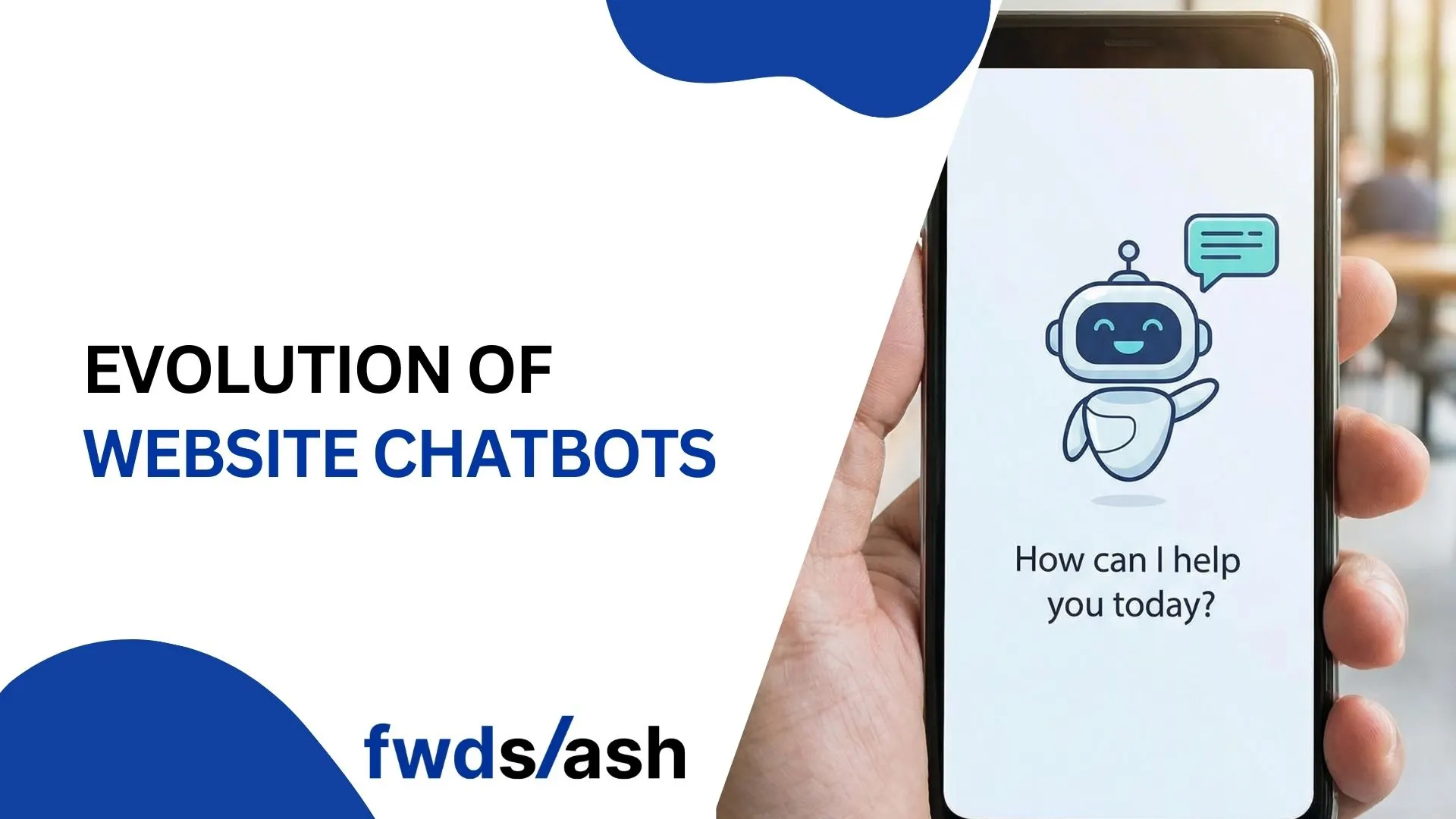
Website chatbots have evolved quietly but radically. They went through one of the most significant transformations in modern product history.
What started as a simple way to “talk to support” has evolved into something far more powerful and intelligent, a programmable interface that can understand intent, reason over context, and take action across systems.
This evolution didn’t happen overnight. Each phase of website chat emerged to solve the limitations of the previous one, from human-led support, to rule-based automation, to AI-powered agents. Understanding this progression helps explain why modern website chatbots look less like scripts and more like digital teammates.
Evolution of Website Chatbots
Phase 1: Live Chat as a Customer Support Channel
The earliest version of website chat was simple and human-led.
A small chat widget on a website connected visitors directly to a customer support agent. The objective wasn’t automation or efficiency. It was availability. Businesses wanted to be reachable at the moment a user had a question, doubt, or issue.
At this stage, website chat was not designed as a product feature. It was an extension of the support desk, sitting alongside email and phone support, but offering faster, more conversational interactions.
What Live Chat Solved
Live chat addressed a key gap in traditional support channels:
- Real-time communication without phone calls
- Faster responses compared to email
- Human empathy and contextual understanding
- The ability to handle complex, unstructured issues
For many businesses, live chat improved customer satisfaction simply by making help feel closer and more accessible.
Where Live Chat Failed to Scale
As traffic grew, the limitations of live chat became clear:
- Every conversation required a human agent
- Support costs increased linearly with usage
- Coverage was limited by time zones and working hours
- Agents spent significant time answering repetitive questions
Early tools like LiveChat, Olark, and Zendesk Chat made human support instantly accessible on websites, especially for SaaS and e-commerce. As usage grew, teams quickly hit a ceiling where response quality depended entirely on adding more agents.
These constraints set the stage for the next phase of website chat: automation.
Phase 2: Rule-Based and Decision-Tree Chatbots
As websites grew in traffic and complexity, live chat alone became difficult to sustain. Businesses needed a way to handle common questions at scale without expanding support teams indefinitely. This led to the rise of rule-based and decision-tree chatbots.
Instead of open-ended conversations, these chatbots guided users through predefined paths using buttons, menus, and scripted logic. The goal was not to replace human support entirely, but to filter, route, and deflect requests before they reached an agent.
The Rise of Automated Chat Workflows
Rule-based chatbots introduced structure into website conversations. They were designed to:
- Answer frequently asked questions
- Route users to the right department
- Collect basic information before escalation
- Provide 24/7 availability
For the first time, website chat could operate without a human present, a major step forward in scalability.
Why Rule-Based Chatbots Plateaued
Despite their efficiency, decision-tree chatbots came with clear limitations:
- Users had to adapt to the bot’s logic, not the other way around
- Any unexpected input broke the flow
- Maintaining and expanding flows became complex over time
- Conversations felt transactional and rigid
These chatbots worked well when user intent was predictable, but struggled with nuance, ambiguity, and multi-part requests. Automation improved efficiency, but understanding was still missing.
Rule-based chatbots improved efficiency, but they couldn’t evolve alongside users. Every new behavior required manual redesign.
Phase 3: AI-Powered Website Chatbots
The limitations of rule-based chatbots weren’t solved by adding more flows or better scripts. They required a fundamentally different approach, one where the system could understand language, not just route it.
This shift arrived with large language models.
Instead of forcing users to select from predefined options, AI-powered website chatbots could now interpret free-form input, recognize intent, and respond in a way that felt natural and contextual. For the first time, chat systems adapted to users, not the other way around.
How Large Language Models Changed Website Chat
Large language models introduced capabilities that earlier chatbots simply didn’t have:
- Understanding natural, unstructured language
- Handling vague, incomplete, or multi-part queries
- Maintaining context across turns in a conversation
- Generating responses dynamically instead of selecting from scripts
This removed the design constraint that had capped earlier chatbots. Conversations no longer had to be anticipated in advance they could emerge organically.
From Workflow Execution to Intent Understanding
More importantly, AI-powered chat shifted the goal of website chat.
Earlier systems focused on executing workflows: routing tickets, showing FAQs, or collecting information. AI chatbots shifted the focus to understanding what the user is actually trying to achieve.
This meant a single input like:
“I’m confused about my plan and need help upgrading.”
could trigger reasoning, clarification, and multiple actions without the user navigating a decision tree.
AI-powered website chatbots didn’t just make conversations smoother. They made chat capable of judgment, not just automation.
This shift laid the foundation for the next evolution: AI agents.
From Chatbots to AI Agents
AI-powered chatbots improved conversations, but they still largely stopped at answering questions. AI agents take the next step - they can reason, decide, and act.
What Makes an AI Agent Different from a Chatbot
An AI agent is defined by responsibility, not replies.
It can:
- Understand intent
- Decide what action is needed
- Use tools or systems
- Complete multi-step tasks
A chatbot responds. An agent gets things done.
Website Chat as an Execution Layer
With AI agents, website chat becomes more than an interface - it becomes an execution layer. Instead of routing users elsewhere, the agent performs actions directly within business systems.
This marks a shift from chat as a support feature to chat as a functional part of the product.
Designing What Comes Next
Website chat has evolved from human support to scripted automation, to AI-driven agents that can reason and act. Each phase didn’t replace the previous one; it emerged to solve its limits.
Today, the opportunity is no longer in adding another chatbot, but in intentionally designing what that agent should be responsible for. Platforms like are built for this shift - helping teams move from basic chat experiences to reliable AI agents that actually do work, without treating chat as a fragile experiment.
The future of website chat isn’t about talking more. It’s about getting more done.


Lastest blog posts
Tool and strategies modern teams need to help their companies grow.